Emory Douglas, The Black Panther: All Power to the People
Getty Conversations

A young boy spreads the news of revolution in this Emory Douglas print.

Emory Douglas, The Black Panther: All Power to the People, 1969, lithograph on paper, 57.1 x 38 cm, The Merrill C. Berman collection of posters relating to United States twentieth-century social movements (Getty Research Institute, Los Angeles, 2023.M.58) © Emory Douglas. Speakers: Dr. LeRonn P. Brooks, Curator, Getty Research Institute, and Dr. Steven Zucker, Smarthistory

The Black Panther Party was founded by Huey P. Newton and Bobby Seale in 1966 to challenge racism and oppression with militant defense and community focus, and an education program that centered human and civil rights. The artist Emory Douglas (American, b. 1943) was one of the early members of the Panthers and served as the group’s Minister of Culture. Originally trained as a commercial artist, Douglas wanted to use the visual tools of advertising for Black liberation and radical revolution, seeing his community in Oakland, CA as an important space to share revolutionary ideals through graphic media. His print of a young boy holding up the Black Panthers’ newspaper, which had a circulation of hundreds of thousands of readers at its height, emblematizes the bold visuals and mass communication tactics used to spread the party’s political message to the public. Though the boy has a rifle slung on his shoulder, it’s the newspaper that is the real weapon.

This program is associated with the Getty Research Institute’s African American Art History Initiative, which focuses on the history, practices, and cultural legacies of artists of African American and African diasporic heritage. The initiative aims to provide a more robust and accurate account of American art through Black history.

Getty has joined forces with Smarthistory to bring you an in-depth look at select works within our collection, whether you want to learn more at home or make art more accessible in your classroom. This video series illuminates art history concepts through fun, unscripted conversations between art historians, curators, archaeologists, scientists, and artists, committed to a fresh take on the history of visual arts.

This video was made possible by the GRI Council.

0:00:07.1 Dr. Steven Zucker: We’re in a study room at the Getty Research Institute up at the Getty Center overlooking Los Angeles. But our focus is on this beautiful print by Emory Douglas, one of the early members of the Black Panthers.

0:00:21.8 Dr. LeRonn P. Brooks: This print by Emory Douglas, who was the Minister of Culture for the Black Panther Party, is indicative of this idea of revolution, is spreading the news of revolution. They are the inheritors of a visual language of revolution.

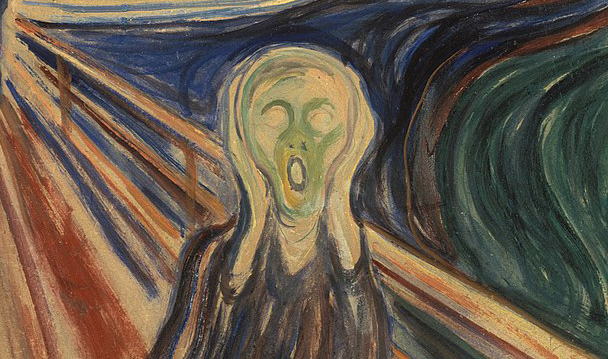
0:00:35.3 Dr. Steven Zucker: It absolutely recalls the history of Western art. I’m thinking about Liberty Leading the People by Delacroix. In fact, even the image of the young boy recalls that young boy on the right of the personification of liberty. The artist has done an amazing job of conveying information. We know immediately that this is a newspaper. There’s one that’s being held up and that’s unfurled, one that’s rolled in his left hand. And then the masthead of the newspaper shows the title of the newspaper, but the paper itself screams this headline, “All power to the people,” which was the rallying cry of the Black Panthers.

0:01:19.0 Dr. LeRonn P. Brooks: This particular image depends as well on the idea of the icon. So on these newspapers, we see Huey P. Newton, one of the founding members of the Black Panther Party, with that beret—and so Che Guevara, that revolutionary imagery in terms of the young, youthful, romantic revolutionary—they’re using that particular language.

0:01:28.0 Dr. Steven Zucker: And the newspaper was incredibly influential. It had a circulation of hundreds of thousands at its height. This was a newspaper that was distributed across the country.

0:01:36.5 Dr. LeRonn P. Brooks: When you see an image like this, it’s a print, and it’s made for massive reproduction. It’s made to be seen by the public and to be in the public’s reach, not in a gallery of art, but on walls, to be handed out at lectures, at colleges, or to be handed out on street corners.

0:01:52.8 Dr. Steven Zucker: And in fact, the artist, Emory Douglas, thought of his community in Oakland as a gallery, as a public forum. And, yes, this image is calling out to people on the street, and he’s distributing the Black Panther newspaper, which Emory Douglas played a large role in designing and distributing.

0:02:10.1 Dr. LeRonn P. Brooks: And so we can think about the idea of printmaking as an educational medium, especially when we think about the Mexican Revolution and the ways that prints are inexpensive ways to pass along information. We don’t have the Internet. We don’t have cell phones. So the idea of how one gets information is radically different than we understand it today.

0:02:28.8 Dr. Steven Zucker: And the artist is so brilliant in creating a clarified image that’s easy to read. This is meant to communicate with energy and with conviction and to do it quickly. He’s put this figure against a blue field which has a slight gradation to it, going from light to dark. And he’s drawn the figure and the newspapers that he holds and the rifle that he carries with a thick black line so that this is all super clear. We get it immediately.

0:02:55.6 Dr. LeRonn P. Brooks: Everything sticks out from the folds in his shirt. The sleeves are rolled up to say that he’s doing work.

0:03:01.5 Dr. Steven Zucker: And the idea of that mouth open, of him speaking, of him proclaiming its message, perhaps proclaiming the Black Panthers’ Ten Point Program, is so historically important because Black voices were so often silenced.

0:03:16.1 Dr. LeRonn P. Brooks: This is a community of migrants, largely one generation away from the South and Jim Crow segregation, and that kind of oppression. And here they find themselves in major cities, Oakland, San Francisco, the West Coast, but you also have them in Harlem and in the Midwest. And so it’s a real radical education in terms of one’s rights. And so when people think about the Black Panther Party for Self-Defense, we’re talking about educating people on their rights as citizens. This is in the age where you have the young believing that democracy is a people’s process. And if the people don’t let their voice be heard, then democracy will revert or will not move forward. And so we see this young man here. He’s indicative of the youth led movements at the time.

0:03:58.0 Dr. Steven Zucker: The founders of the Black Panther Party had gone to Berkeley. They studied constitutional law, and they used that to challenge the oppression of white police and of white politicians. And they did it with a kind of militarism that was incredibly upsetting to the status quo. And the Black Panthers famously instituted a whole series of community support systems. This included schools to help to counteract the failed public schools, medical clinics, a free breakfast program in Oakland. They were trying to take care of their community.

0:04:31.0 Dr. LeRonn P. Brooks: Textbooks did not have any extended histories of African Americans beyond their enslavement. And so learning about one’s history, one’s own contributions to history and to this present moment was also radical and revolutionary in the 1960s.

0:04:44.6 Dr. Steven Zucker: But what I find fascinating is the way that Emory Douglas is thinking about art itself. He had been trained as a commercial artist, but he saw the advertising that bombarded the Black community as being oppressive, as putting people in more debt. And he wanted to take those tools and use it for Black liberation.

0:05:02.0 Dr. LeRonn P. Brooks: This is a little more than 100 years outside of chattel slavery. And so the idea of African Americans in the mainstream imagination hadn’t really transitioned, envisioning African Americans as free or envisioning African Americans with the kind of autonomy with which they can actually do things like bear arms, which is a constitutional right.

0:05:20.9 Dr. Steven Zucker: Although in this particular image, the artist has chosen to put the newspaper forward. It’s the gun that’s in the back. The gun is in reserve.

0:05:29.4 Dr. LeRonn P. Brooks: And it’s a newspaper that’s the weapon. It’s the ability to read. It is the ability to explore one’s intellect and to grow one’s intellect. It’s the ability to recognize oneself as part of a community of people who are working toward an ideal. And so the gun is not being wielded but the newspaper, and the kinds of radical information about freedom being shown to people through that newspaper is radical.

0:05:51.8 Dr. Steven Zucker: And the artist has been quoted as saying that politics came first, art came second. This art was in the service of their politics.

0:06:00.2 Dr. LeRonn P. Brooks: Art is usually in the service of ideas and ideals. And so the idea of revolution continues. The way in which it’s expressed is of this moment and in this particular time.

Title The Black Panther: All Power to the People
Artist(s) Emory Douglas
Dates 1969
Places North America / United States
Period, Culture, Style Modernisms / Civil Rights era
Artwork Type Print
Material Paper
Technique Lithography

This work at the Getty Research Institute

African American Art History Initiative

Merrill C. Berman collection at the Getty Research Institute

View the Getty Conversations series

Sam Durant, editor, Black Panther: The Revolutionary Art of Emory Douglas (New York: Rizzoli, 2014).

Marc James Leger, “By Any Means Necessary: From the Revolutionary Art of Emory Douglas to the Art Activism of Jackie Sumell,” Afterimage, volume 38, number 5 (2011), pp. 8–14.

Silas Munro, Strikethrough: Typographic Messages of Protest (San Francisco: Letterform Archive, 2022).

Cite this page as: Dr. LeRonn P. Brooks, Curator, Getty Research Institute and Dr. Steven Zucker, "Emory Douglas, The Black Panther: All Power to the People
Getty Conversations," in Smarthistory, October 9, 2025, accessed December 16, 2025, https://smarthistory.org/emory-douglas-black-panther/.