

Bust of an African Child, 2nd–3rd century C.E. (Roman), bronze, 12.7 x 10 x 4.9 cm (Rhode Island School of Design Museum, Providence; photo: Steven Zucker, CC BY-NC-SA 2.0)
Context, representation, and reflection on otherness in the Roman Empire
What can a single sculpted face tell us about race, representation, and empire in the ancient world? The bronze bust of an African child, likely used as a balsamarium (a perfume/incense holder), provides a compelling lens into the diverse and complex cultural landscape of the Roman Empire. Objects like these, found across Roman provinces in Britain, Portugal, Syria, Egypt, and beyond, reveal the interconnectedness of Roman society while highlighting how art constructed ideas of “otherness.” These small, functional objects were also rich in visual messaging, blurring the lines between luxury, exoticism, and identity. This essay explores the significance of the bust’s form, its representation of ethnic identity, and the historical context that informs both its creation and modern interpretations. As we examine this object, we must also consider how such depictions shaped perceptions of Africa and Africans within and beyond the Roman world.
The child’s features are rendered with close attention to anatomical specificity: a broad nose, full lips, and textured hair, each carefully incised into the bronze surface to suggest tight curls or braids. These details emphasize a clear ethnic identity. The slightly parted lips and upward gaze create an impression of alertness or vulnerability.
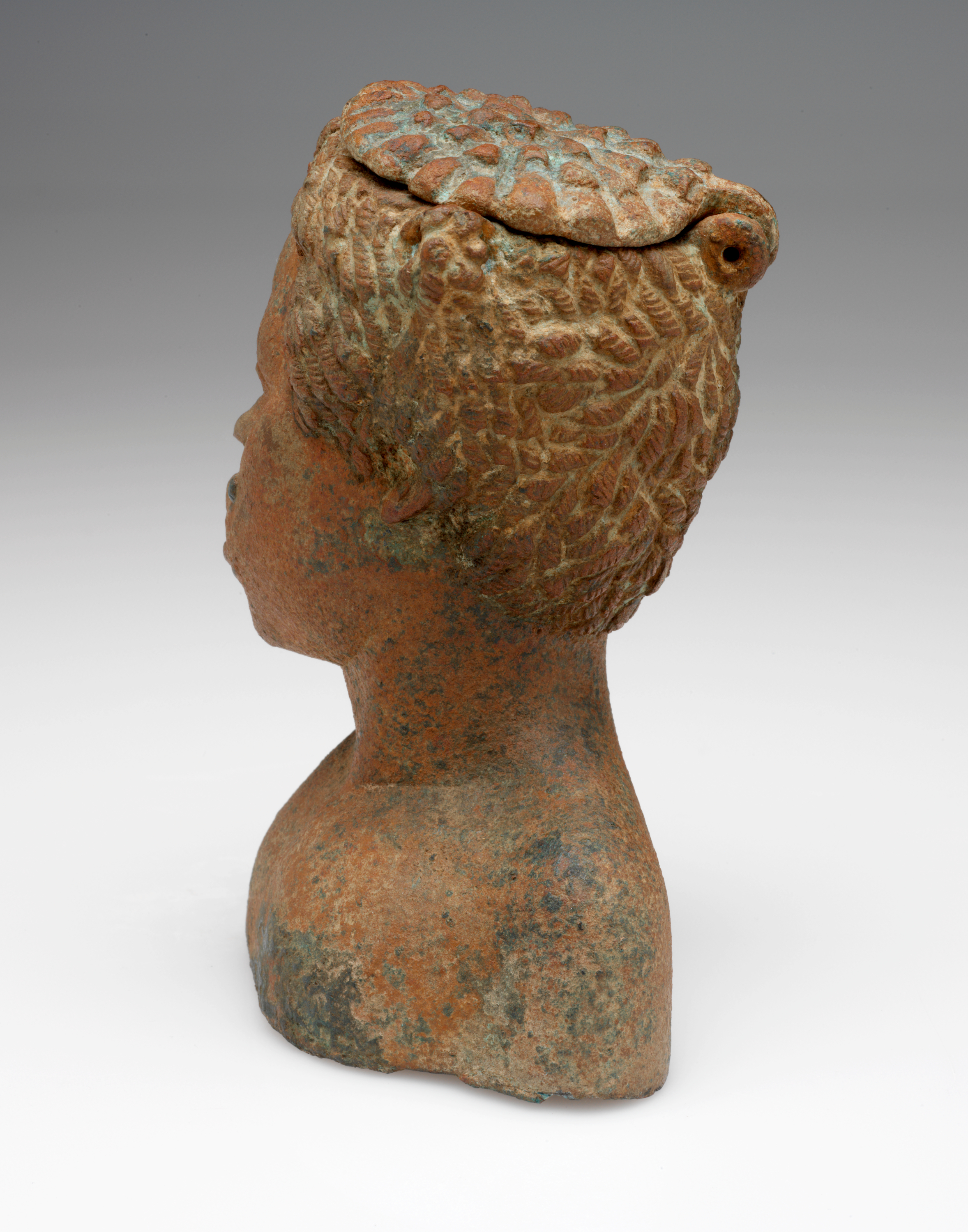
Bust of an African Child, 2nd–3rd century C.E. (Roman), bronze, 12.7 x 10 x 4.9 cm (Rhode Island School of Design Museum, Providence)
The lid atop the head, fitted with a hinge, confirms the object’s utilitarian function as an incense or perfume container. The presence of such an intimate vessel in domestic or funerary contexts indicates that the bust was intended to be both seen and handled, merging functionality with a powerful visual evocation of difference and exoticism. While small in scale, the bust carries a disproportionate visual and emotional weight, prompting modern viewers to reflect on how ancient societies perceived, commodified, and aestheticized Black bodies within imperial systems.
Form and function
As a balsamarium, this bust served a practical role in everyday Roman life. Crafted using the lost-wax method, its functional design included loops for hanging, a lid, and traces of a pedestal. However, it was not purely utilitarian; its symbolic function lay in its depiction of a child with distinctly African features. Such representations were common in Roman material culture, appearing on vessels that depicted mythological figures, creatures, boxers, and Africans. The bust’s original audience would have understood it as representing an “other,” an exotic figure within the Roman Empire’s vast and diverse territories.

Bust of an African Child, 2nd–3rd century C.E. (Roman), bronze, 12.7 x 10 x 4.9 cm (Rhode Island School of Design Museum, Providence)
Cultural context and symbolism of otherness
The bust’s African features would have marked it as a symbol of “otherness” in the Roman world. Romans often used art to construct and convey identity, defining who belonged and who did not. Representations of Africans in Roman art were not always pejorative; rather, they served to highlight cultural diversity within the empire. The bust, originating from Samannud, Egypt (according to its curatorial files), stands as evidence of the Roman Empire’s geographic and cultural breadth.
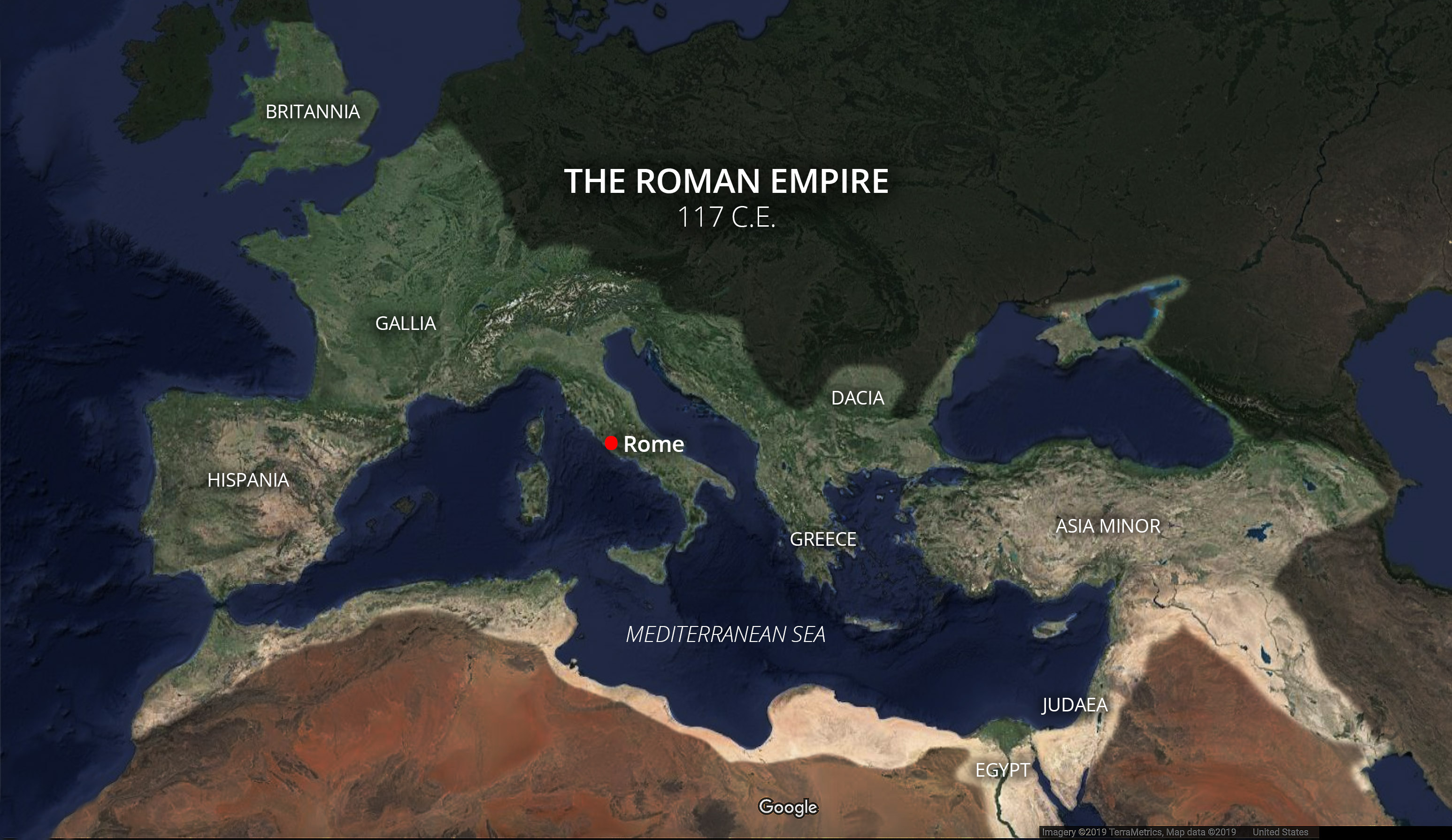
Roman Empire, c. 117 C.E. (underlying map © Google)
This object raises critical questions: Was it made locally in northern Africa, or was it imported? Without an archaeological context, such questions remain unanswered. Nonetheless, the bust’s existence challenges modern assumptions about the homogeneity of the ancient world, reinforcing that African identity was present and visible in Roman society.
Modern misinterpretations and colonial influence
Modern interpretations of the bust have been clouded by colonial narratives and racial prejudices. The museum object card describing it as a “Negro head perfume vase” and entries in the RISD Handbook of the Museum of Art (1985), portraying the child as a “negro captive” with a contemptuous glare, reflect colonial biases rather than historical accuracy. These fictional interpretations underscore how Blackness has often been perceived through a colonial lens instead of within its pre-colonial context.
This bronze bust prompts contemporary viewers to confront ideas of race and identity throughout history. While the Roman audience may have viewed the child as an “other,” the nuance and realism of the representation resist simplistic or derogatory interpretations. Rather than relegating the bust to the margins, it encourages a broader understanding of the ancient world’s diversity.
Conclusion
The Bust of an African Child transcends its role as a functional balsamarium to become a powerful symbol of the complexities of identity and representation in the Roman Empire. Modern viewers must wrestle with both its Roman African context and the colonial narratives that shaped later interpretations. This object compels us to acknowledge Africa’s historical significance and honor its representation within the ancient world. By doing so, we recognize that classical art, far from being monolithic, reflects the diversity and interconnectedness of an expansive empire.