


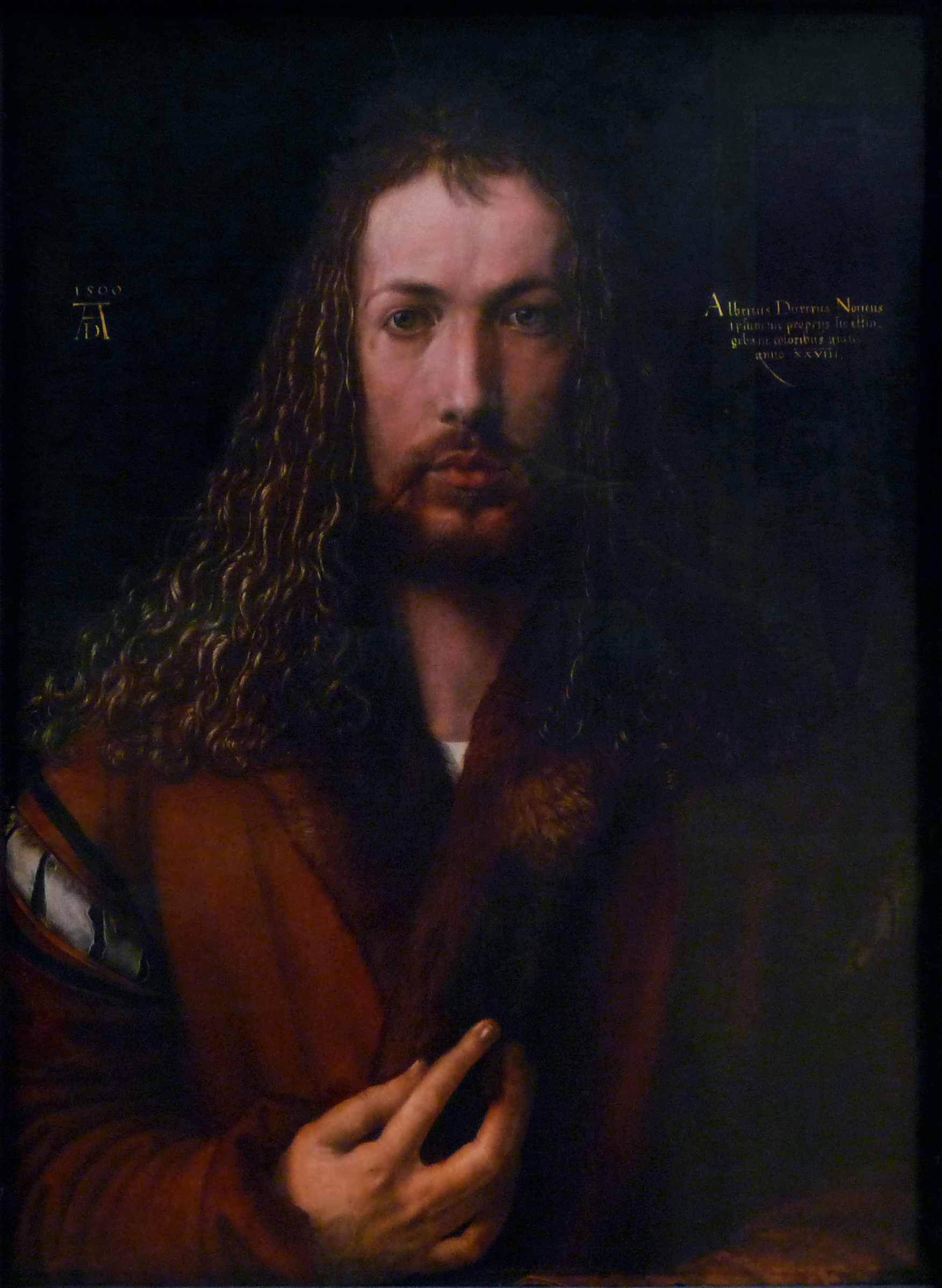
Albrecht Dürer, Self-Portrait, 1500, 67.1 x 48.9 cm (Alte Pinakothek, Munich; photo: Steven Zucker, CC BY-NC-SA 2.0)
What was the Renaissance and where did it happen?
The word Renaissance is generally defined as the rebirth of classical antiquity in Italy in the fifteenth and sixteenth centuries. Seems simple enough, but the word “Renaissance” is actually fraught with complexity.
Scholars argue about exactly when the Renaissance happened, where it took place, how long it lasted, or if it even happened at all. Scholars also disagree about whether the Renaissance is a “rebirth” of classical antiquity (ancient Greece and Rome) or simply a continuation of classical traditions but with different emphases.
Traditional accounts of the Renaissance favor a narrative that places the birth of the Renaissance in Florence, Italy. In this narrative, Italian art and ideas migrate North from Italy (largely because of the travels of the great German artist Albrecht Dϋrer who studied, admired, and was inspired by Italy, and he carried his Italian experiences back to Germany).
The Northern Renaissance
However, so much changed in northern Europe in the fifteenth and sixteenth centuries that the era deserves to be evaluated on its own terms. So we use the term “Northern Renaissance” to refer to the Renaissance that occurred in Europe north of the Alps. Like Florence, cities in northern Europe (Bruges, Ghent and then later Antwerp and Brussels), were rich industrial and banking centers during this period and this allowed a large merchant-class to flourish creating an ideal environment for artistic production.
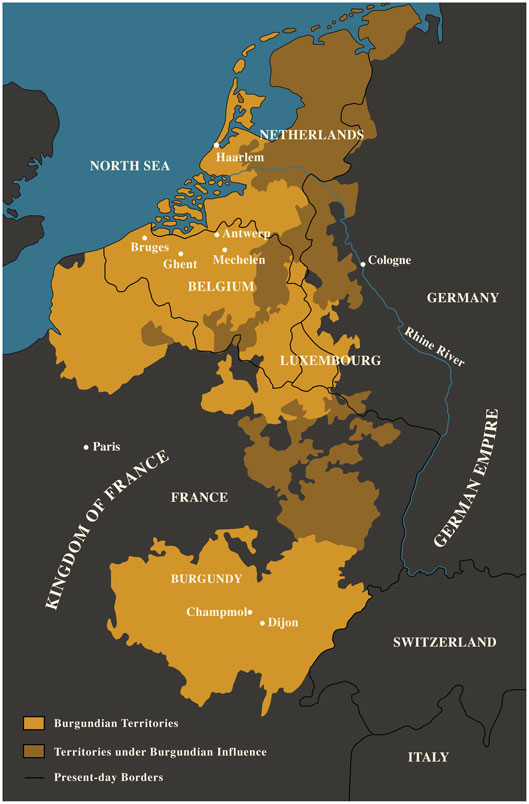
Burgundy and the Burgundian Netherlands in 1467 (map: National Gallery of Art)
In the fifteenth century, the northern European countries we know today as Belgium, the Netherlands, Luxembourg and parts of France were controlled by the enormously wealthy Dukes of Burgundy. This region during the fifteenth century is often referred to, today, as the Burgundian Netherlands. The court of the Dukes of Burgundy were the most important patrons of the early Northern Renaissance, but newly wealthy private citizens also commissioned art as part of a growing interest in private meditation and prayer. Portraits were also commissioned in growing numbers.
Classical antiquity?
In Italy, the Renaissance was deeply influenced by the art and culture of Ancient Greece and Rome—in part because the art and architecture of antiquity was more immediately available (ruins were plentiful in many cities). Northern Europe however did not have such ready access to ancient monuments and so tended to draw instead more directly from medieval traditions such as manuscript illuminations.
A mercantile world
Though profoundly different, the Italian and Northern Renaissances shared a similar interest in the natural world and re-creating the illusion of reality in their paintings and sculptures. The great artists of this period created work that reflected their increasingly mercantile world, even when they worked for the court of the Dukes. The spiritual world reigned supreme but the representation of wealth and power were also a hugely important motive for patrons whether a pope, a duke, or a banker.
Oil paint
Though the medium of oil paint had been in use since the late Middle Ages, the artists of the North more fully exploited this medium’s unique characteristics. Using thin layers of paint, called glazes, northern artists created a depth of color that was entirely new, and because oil paint can imitate textures far better than fresco or tempera, it was perfectly suited to representing the material reality that was so important to Renaissance artists and their patrons. In the Northern Renaissance, we see artists making the most of oil paint—creating the illusion of light reflecting on metal surfaces or jewels, and textures that appear like real fur, hair, wool or wood.
Other important changes in northern Europe include the:
- invention of the printing press, c. 1450
- advent of mechanically reproducible media such as woodcuts and engravings
- formation of a merchant class of art patrons that purchased works in oil on panel
- Protestant Reformation and the translation of the Bible from the original languages into the vernacular or common languages such as German and French
- international trade in urban centers
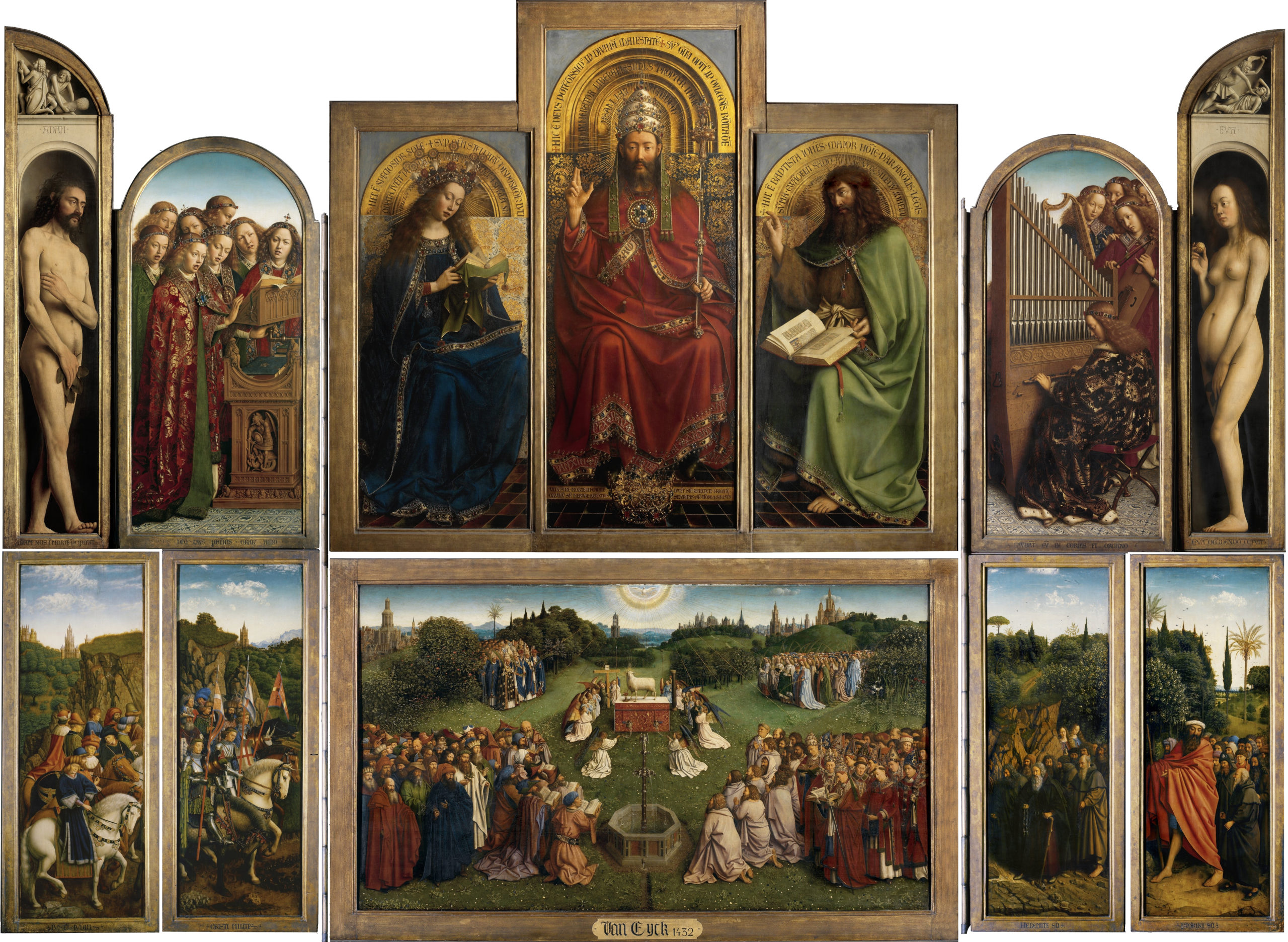
Jan (and Hubert?) van Eyck, Ghent Altarpiece (also known as The Adoration of the Mystic Lamb), interior, 1432, tempera and oil on panel, 11-5/8 x 15-1/8 inches (open) (Cathedral of Saint Bavo, Ghent, Belgium; photo: Zen3500)
The fifteenth century: van Eyck
In the fifteenth century, northern artists such as Jan van Eyck introduced powerful and influential changes, such as the perfection of oil paint and almost impossible representation of minute detail, practices that clearly distinguish Northern art from Italian art as well as art from the preceding centuries. Jan and Hubert van Eyck’s Ghent Altarpiece, 1432 (Church of Saint Bavo, Ghent) exemplifies the grand scale and minute detail of Northern painting.
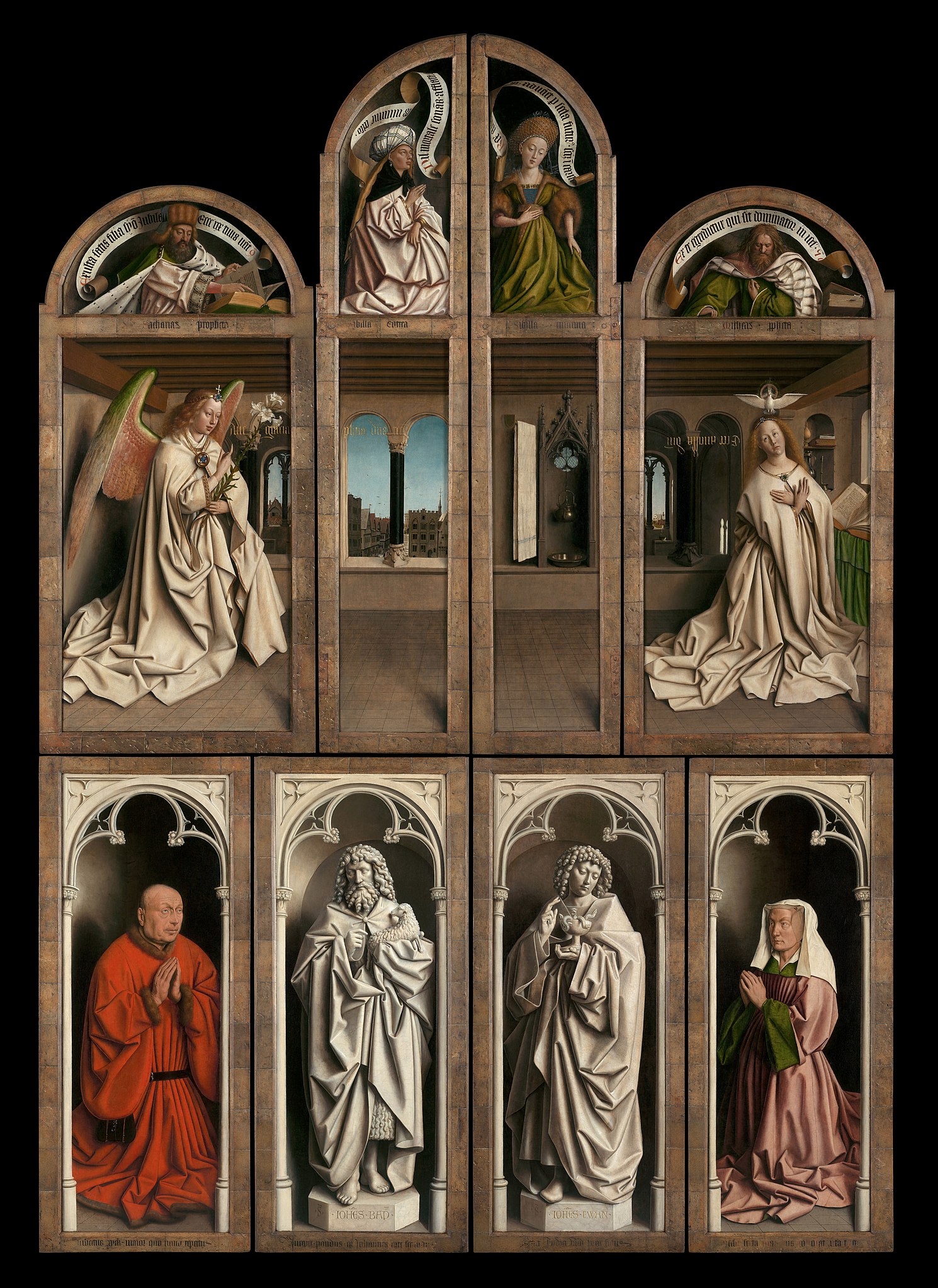
Jan (and Hubert?) van Eyck, Ghent Altarpiece (also known as The Adoration of the Mystic Lamb), exterior, 1432, tempera and oil on panel, 147-5/8 x 102 -3/8 inches (closed, after restoration) (Cathedral of Saint Bavo, Ghent, Belgium; photo: Madatoille)
This public, religious picture has an open and closed position. On the interior, we see such holy figures as the Virgin, Christ, saints, and angels. It also showcases the largesse of the donors, depicted kneeling on the lowest corners of the exterior, who employed the van Eyck brothers to immortalize them in this very public work of art.
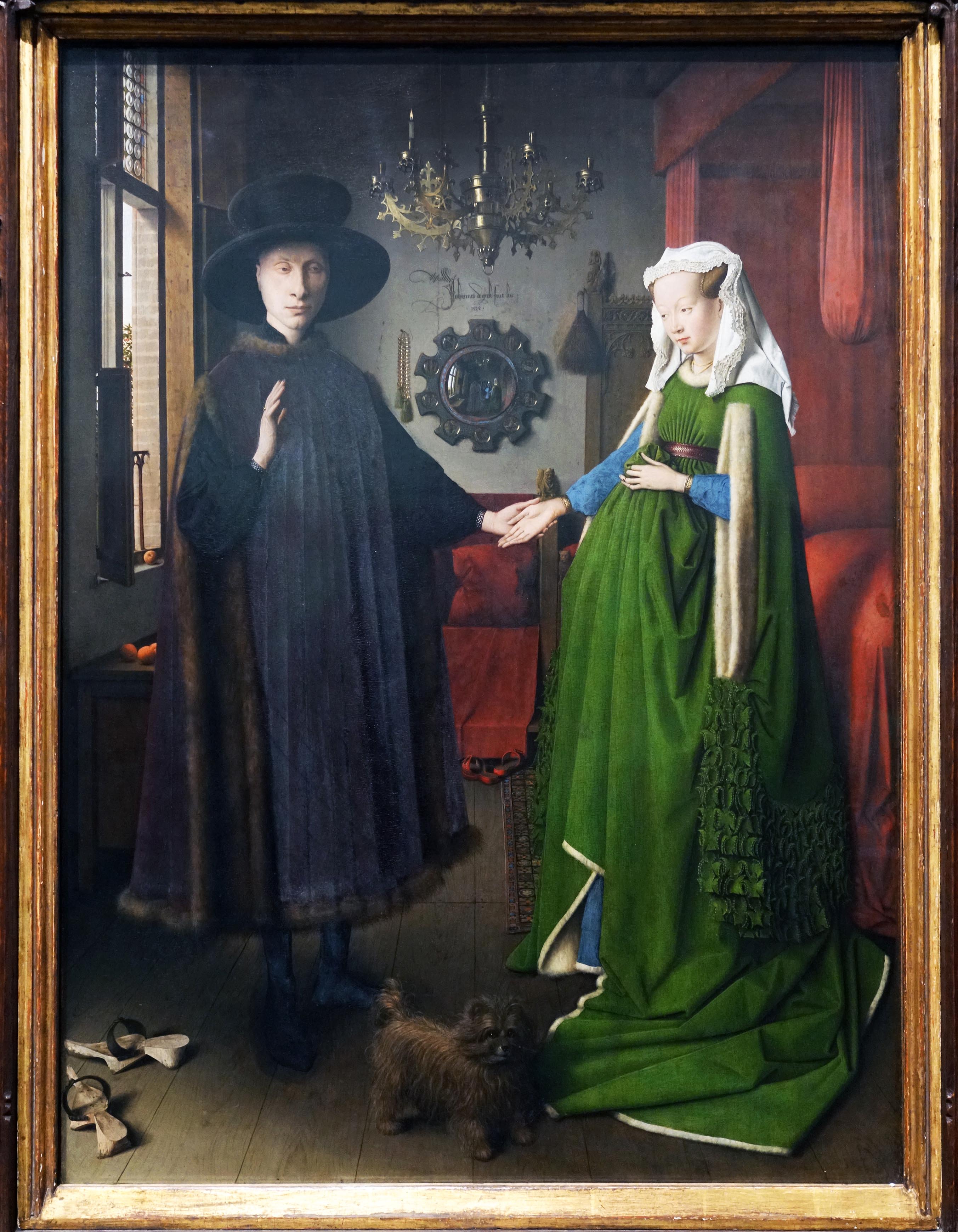
Jan van Eyck, The Arnolfini Portrait, 1434, tempera and oil on oak panel, 82.2 x 60 cm (The National Gallery, London; photo: Steven Zucker, CC BY-NC-SA 2.0)
Jan van Eyck’s Arnolfini Portrait shows a well-to-do couple in a tasteful, bourgeois interior. The text in the back of the image identifies the date and Jan van Eyck as the artist. Art historians disagree about what is actually happening in the image, whether this is a betrothal or a marriage, or perhaps something else entirely. One of the most important aspects of this painting is the symbolic meanings of the objects, for instance that the dog may symbolize fidelity (“Fido”) or that the fruit on the windowsill may signify either wealth or temptation. This painting is a touchstone for the study of iconography, a method of interpreting works of art by deciphering symbolic meaning.
Though Jan van Eyck did not invent oil paint, he used the medium to greater effect than any other artist to date. Oil would become a predominant medium for painting for centuries, favored in art academies into the nineteenth century and beyond. The Arnolfinis counted as middle class because their wealth came from trade rather than inherited titles and land. The power of the merchant-class patrons of northern Europe cultivated a taste for art made for domestic display. Decorating one’s home is still a powerful motivation for art patrons.


