

This ivory sculpture of Jesus traveled between three continents, demonstrating the global flow of materials, objects, and Christianity in the 16th and 17th centuries.
Christ Crucified, 17th century, ivory (Museo Franz Mayer, Mexico City). Speakers: Dr. Lauren G. Kilroy-Ewbank and Dr. Steven Zucker
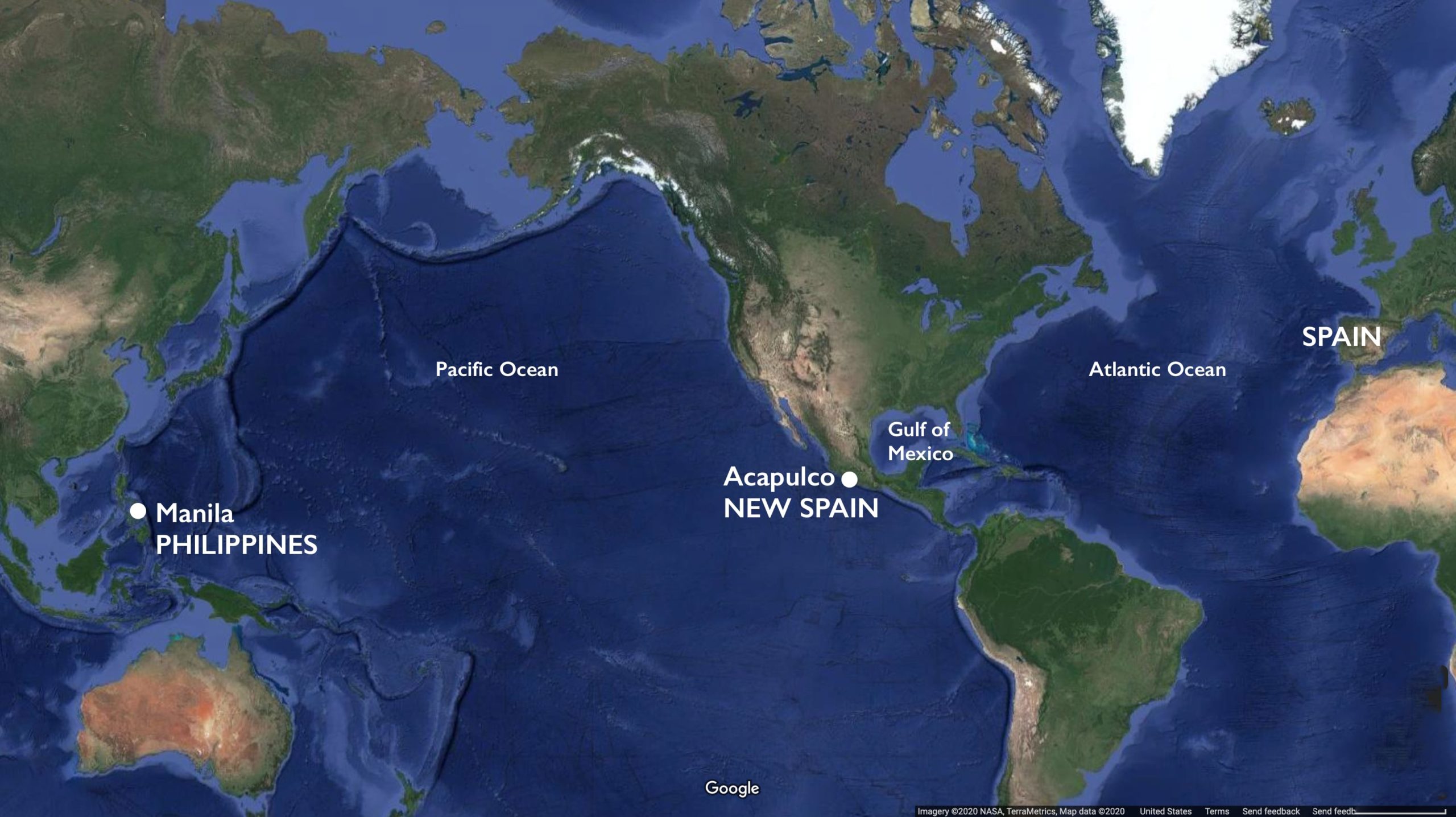
Trade between the Philippines, New Spain and Spain
Introduction
Both the Philippines and Mexico formed part of what was once called the Viceroyalty of New Spain, which was controlled by the Spanish Crown. Beginning in the sixteenth century, Spanish galleons (large, multi-decked ships) began to sail between Manila (in the Philippines) and Acapulco (in Mexico). This trans-Pacific Manila Galleon trade created an important route for the global exchange of materials (such as silk, spices, porcelain, and ivory from Asia and silver and gold from the Americas). Many of the resources and goods coming from Asia would also travel overland from Acapulco to the Gulf Coast of Mexico, at which point they would be shipped across the Atlantic Ocean to Spain.
These objects are often labeled “Hispano-Philippine ivory sculptures” to denote their creation in the Philippines (or possibly even China) but made for a Spanish clientele (whether in the Spanish Americas or the Iberian Peninsula). The artists may also have been originally from China.
Artists carved a number of small-scale devotional objects, like Christ Crucified from ivory— a luxurious material in the sixteenth and seventeenth century. While some of these ivory sculptures were ultimately destined for Spain, many remained in the Americas. An object like Christ Crucified also demonstrates the global reach of Catholicism in the sixteenth and seventeenth centuries.